Hiring Without Resumes: A Guide to Resumeless, Skills-First Hiring
By Chris Fairley, Founder & CEO — · 7 min read
More and more businesses are hiring without resumes. Call it resumeless hiring, resume-free hiring, or skills-first hiring: the idea is the same. Instead of judging candidates by a document they wrote about themselves, employers verify who the person is and watch them actually do the work before the interview. This guide explains why the shift is happening, what the resume gets wrong, and how any business can start hiring on proof instead of promises.
What is resumeless hiring?
Resumeless hiring means evaluating candidates without relying on a traditional resume. Instead of a self-written document, employers look at direct evidence: verified identity, short videos of real work, portfolios, demonstrations, and skill assessments. Some companies go fully resume-free. Others keep the resume as a formality but make their real decisions on demonstrated skill. Either way, the resume stops being the gatekeeper.
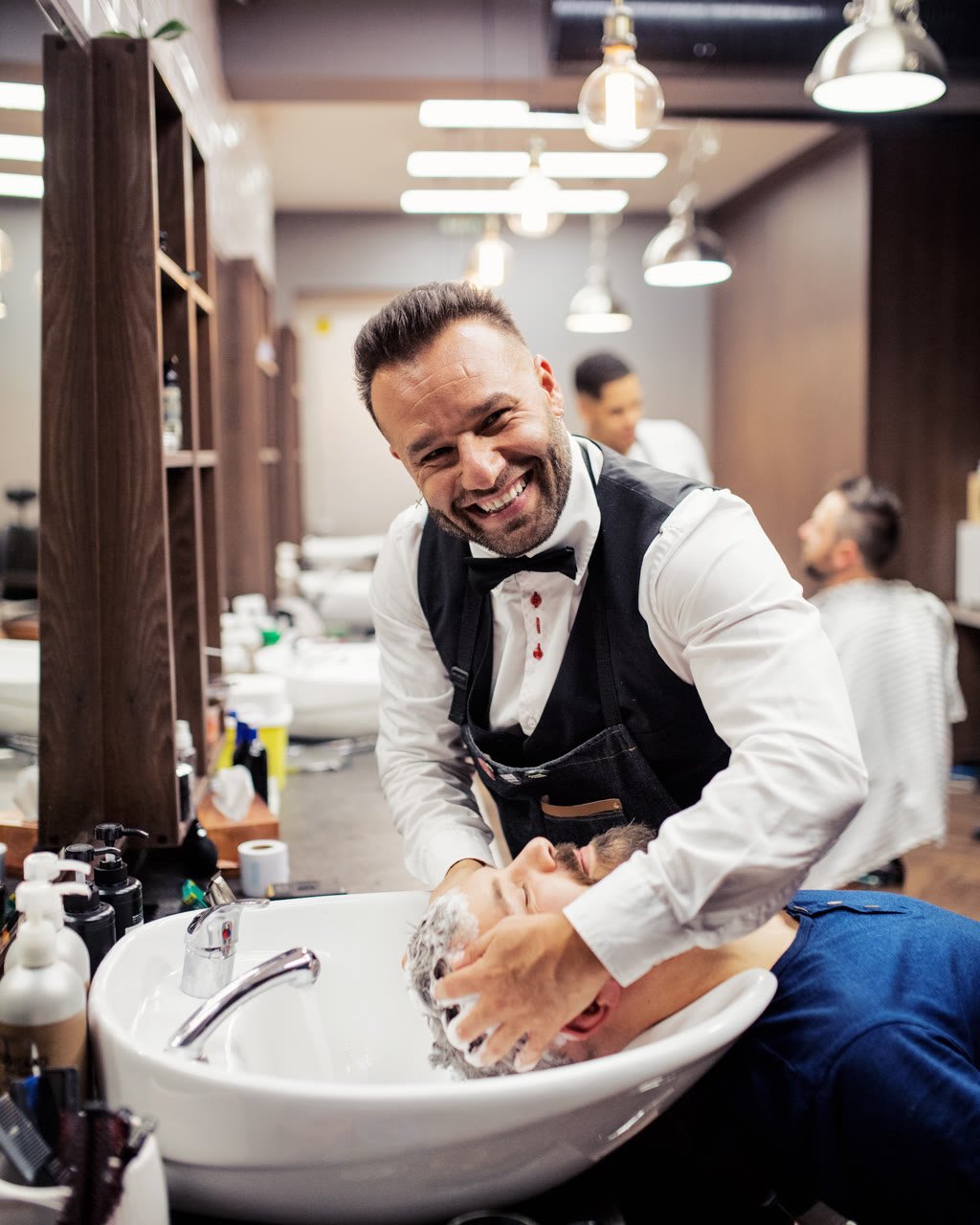
!A barber cutting a client's hair in the chair
The problem: a resume is a self-authored summary of claims
Every word of that definition is a weakness. Self-authored: the applicant writes it themselves and grades their own homework. Summary: it compresses years of work into bullets that cannot show how someone actually performs. Knowing someone managed a kitchen tells you nothing about whether they can plate under fire. Claims: assertions, not evidence. The resume made sense when there was no other way to learn someone's work history. That constraint is gone.
The resume fails in both directions
Bad hires get through on strong paper and a good interview. Almost every business owner has hired someone who did not perform the way the resume promised, and most have done it more than once. But the quieter failure is the reverse: great candidates get filtered out over weak paper. The talented cook who cannot write. The skilled tech with a two-line work history. The strong operator who never learned to sell themselves in bullet points. The right hire whose resume had one typo and never got a call. A resume screens for writing ability, and most jobs are not writing jobs.
!A chef plating a dish on the line

The AI resume arms race
Post one job today and hundreds of replies arrive, most of them AI-generated, perfectly formatted, and written in seconds. Employers respond by buying AI tools to filter the AI resumes. Somewhere in that loop, the actual human being disappeared. Resume-free hiring puts the person back in view: software can fake a document in seconds, but it cannot fake a verified identity holding a clipper, plating a dish, or bending conduit on camera.
What a bad hire really costs
The salary is the smallest part. Count the training weeks spent on someone who does not work out, the reopened job post, the second round of interviews, the shifts covered while the seat sits empty, and the customers who met your worst employee. Then count the hours spent reading resumes for a single opening. Hiring on claims is expensive precisely because the claims are checked after the money is spent, not before.
The better test: proof-based hiring
Proof-based hiring replaces the document with three checks that any business can run.
Verify the person. Confirm identity first, so ghost applicants and interview no-shows end at the door.
Watch the work. Twenty seconds of someone actually doing the job outranks a page of bullets. Cutting the hair. Plating the dish. Running the conduit. Giving the sales demo. Writing the code. Designing the logo.
See evidence before the interview. When proof arrives first, interviews confirm instead of discover. You meet fewer candidates, and better ones.
!An electrician working on wiring at a job site

Does hiring without resumes work for every role?
The resume is not dying tomorrow. Its job is shrinking. Skills-first hiring started where proof is easiest to see: the skilled work that keeps every business running, restaurants, automotive, trades, salons, healthcare, hospitality, and retail. But proof scales everywhere claims do. Sales candidates can give a demo. Developers can walk through code. Designers can record their process. If the work can be shown, the hire can be proven.
How to start hiring without resumes
You can adopt proof-based hiring with three changes, starting with your next opening. First, ask every applicant for a short video of their actual work before scheduling interviews. Second, verify identity before investing your time. Third, weight demonstrated skill over polished paper when deciding who to meet.
Vetano was built to make all three automatic. Every candidate arrives ID-verified with short skill videos attached, so you know who you are hiring before the interview, not after the first shift. Employers post a job in minutes and applicants show up with proof.
> Resumes tell. Vetano shows.
Get your first proof-first job post live
Post a job in minutes and review ID-verified candidates with skill videos attached.
Frequently asked questions
What does resumeless mean?
Resumeless (or resume-free) hiring means evaluating candidates through verified identity and demonstrated skill, such as short work videos, instead of a traditional resume.
Is the resume dead?
No. Its role is shrinking. For a growing number of roles, direct proof of skill is a faster and more reliable signal than a self-written document.
What is proof-based hiring?
Proof-based hiring is making hiring decisions on verified identity and demonstrated skill, with evidence reviewed before the interview rather than checked after the hire.